





Love yourself first, so you can know how to love others truly
We’ve all been there: hearing a specific song, walking down a certain street, or catching a familiar scent, and suddenly, you’re transported back to the person you loved first. For many, that initial romantic connection feels etched into our brains forever.
But is it just romanticism? According to psychological research, there are concrete reasons why our first love occupies such a permanent space in our memory.


A healthy relationship is built on understanding, not on changing each other
1. The « Reminiscence Bump » and Brain Wiring
During adolescence and early adulthood, the brain is highly impressionable. Psychologists refer to this period as the « Reminiscence Bump »—a phenomenon where our brains encode memories from the ages of 10 to 25 with much higher intensity than later experiences.
Because your first love occurred during this developmental window, your brain marked the experience as a significant milestone, effectively etching it into your long-term memory as part of your core identity.

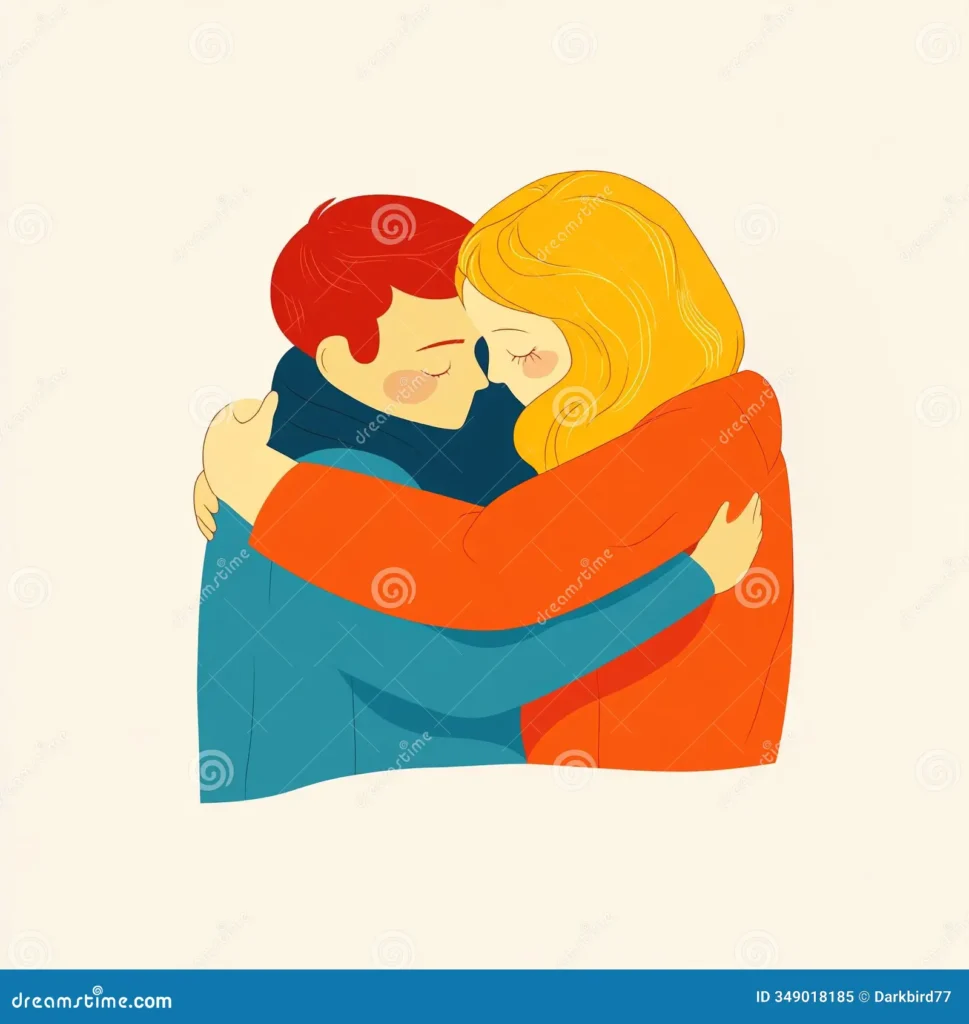
First Love
2. The Zeigarnik Effect: Why Unfinished Business Sticks
Psychology has a specific term for why we can’t let go of certain memories: the Zeigarnik Effect. Discovered by psychologist Bluma Zeigarnik, this principle suggests that the human brain remembers « unfinished » tasks or situations much better than those that reached a clear, satisfying conclusion.
Most first loves don’t end with perfect closure; they often end due to life circumstances or growing pains. Because the story didn’t have a clean ending, your brain keeps « revisiting » the memory, subconsciously trying to resolve the « open loop » of that relationship.
3. The Neurochemistry of « Firsts »
When you experienced your first love, your brain was flooded with a cocktail of dopamine and oxytocin. Neuroscientific research suggests that these chemical surges during our first major romantic encounters act as a « neural imprint. » These interactions aren’t just feelings; they are deep biological connections that link intense euphoria to a specific person, making the memory uniquely resistant to fading.
How to Keep the Past Where It Belongs
It’s perfectly healthy to honor these memories, but don’t let them act as a filter for your present. Here is how to keep things in perspective:
- Avoid Romanticizing the Past: Time has a way of scrubbing away the awkward moments, leaving only the « highlight reel. » Remember: if it were truly sustainable, it likely would have lasted.
- Stop the Comparison Trap: Never compare your current partner to an idealized ghost from the past. Comparing a real person to a memory is the fastest way to sabotage a healthy relationship.
- Treat It as a Lesson: View your first love as your first chapter in emotional maturity. It taught you how to open your heart and set boundaries. That is an achievement, not a tragedy.
The Bottom Line: Your first love wasn’t necessarily the « best » love, but it was your « first lesson. » Honor the memory, but don’t let it steal the joy of what you have today.
Do you think your first love has shaped the way you choose partners today? I’d love to hear your thoughts in the comments.